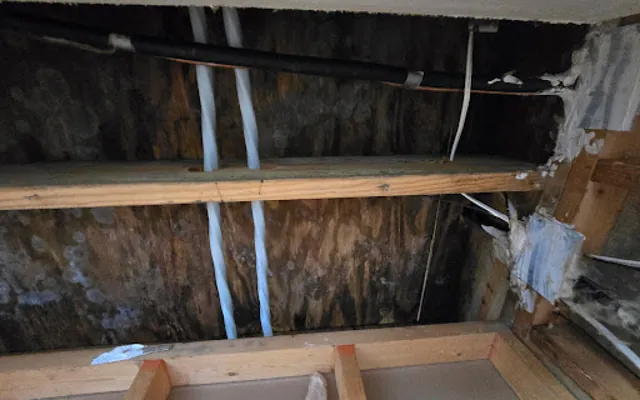
Winter atmospheric river storms push water through aging roofs across Riverside, staining ceilings and soaking attic insulation. All Restoration Solutions arrives in about an hour with IICRC-standard crews to stop the spread and dry your home.

Crews trace water from the ceiling stain back through the attic to the actual roof entry point, which is often several feet away.
Standing water is extracted from attic insulation and flooring, and crews contain the area to stop drips from spreading further.
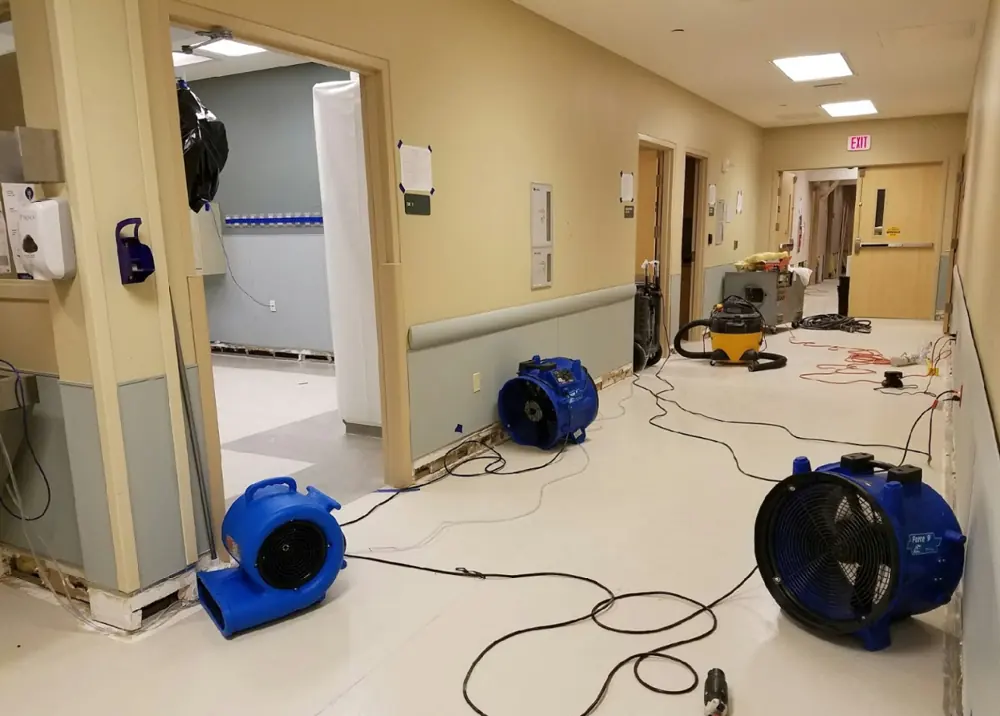
Attic framing, insulation, and ceiling drywall are dried with air movers and dehumidifiers, monitored daily until safe.
Damaged drywall, insulation, and framing are repaired, and crews coordinate a roofer to fix the leak source itself.

While help is on the way, these first steps, done only where it is safe, limit the damage and protect the insurance claim.
Shut the supply off at the source, or close the home's main valve if the source is not obvious. Stopping the flow limits the damage more than anything else.
Switch off electricity to the affected area, but only if the breaker can be reached without standing in or touching the water.
Get a crew dispatched right away. The sooner extraction and drying begin, the more flooring, drywall, and belongings can be saved.
Take photos and a short video of the water and the affected rooms before anything is moved, so the insurance claim starts strong.
Roof leak water damage cleanup in Riverside typically runs $800 to $6,000, depending on how much attic insulation and ceiling drywall was affected and how long the leak went unnoticed before a storm exposed it. Extensive attic saturation or sagging ceilings push costs toward the higher end. Most homeowner's policies cover sudden storm-related roof leaks, and crews document the damage for your claim.
Crews reach Riverside and the Inland Empire fast, from Magnolia Center and the Wood Streets to Arlington, La Sierra, Orangecrest, and nearby Corona and Jurupa Valley. See the full list on the areas served across Riverside page.
See all areas servedEvery loss is photographed, measured, and logged from the first visit, so the paperwork holds up with your insurance carrier.
Technicians follow recognized IICRC drying standards and prove the work with daily moisture readings, not guesswork.
Emergency dispatch any hour of the day or night, with a real crew on the way, not a callback in the morning.
A real crew dispatched any hour, not a callback in the morning.
Trained technicians following recognized IICRC drying standards.
Truck-mounted, portable, and submersible for any size loss.
The loss is documented and billed to the carrier directly.
The ceiling stain rarely sits directly under the real leak. Water often travels along rafters or sheathing before dripping through drywall, so crews trace the path through the attic to find the true entry point before starting repairs.
Yes. Water traveling through the attic can soak insulation, wiring, and framing, then continue down into wall cavities if it reaches an exterior wall top plate. Crews check beyond the visible stain to catch hidden moisture.
Sudden roof leaks from a storm event are typically covered as accidental water damage under most homeowner's policies. Damage from a roof that was already known to be failing before the storm may be treated differently.
Crews handle the water damage restoration, attic drying, and interior repairs, and crews coordinate with a professional roofer to fix the actual leak source so the problem doesn't return with the next storm.
Most attic drying takes 3 to 5 days depending on how saturated the insulation and framing were. Crews monitor moisture levels daily and don't close out the job until readings confirm the space is fully dry.
Riverside crews are on call 24 hours a day, local and fast, and can be on the way within the hour.
Call (951) 406-6363