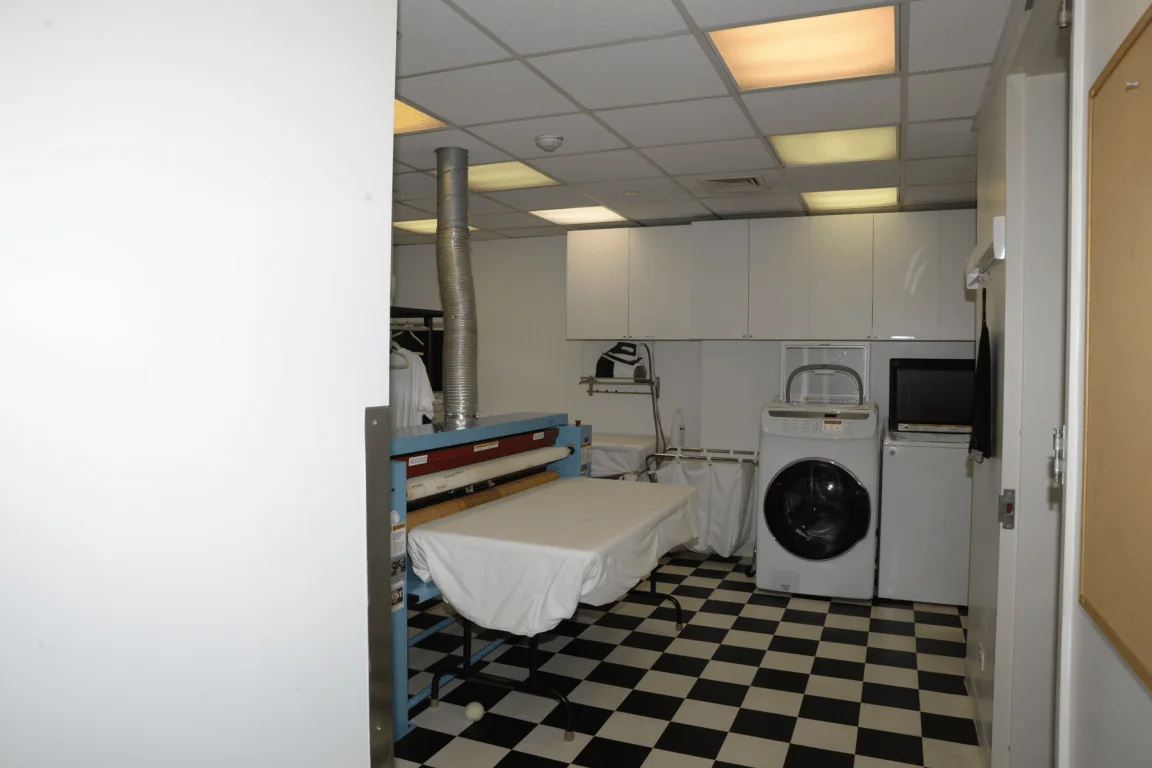
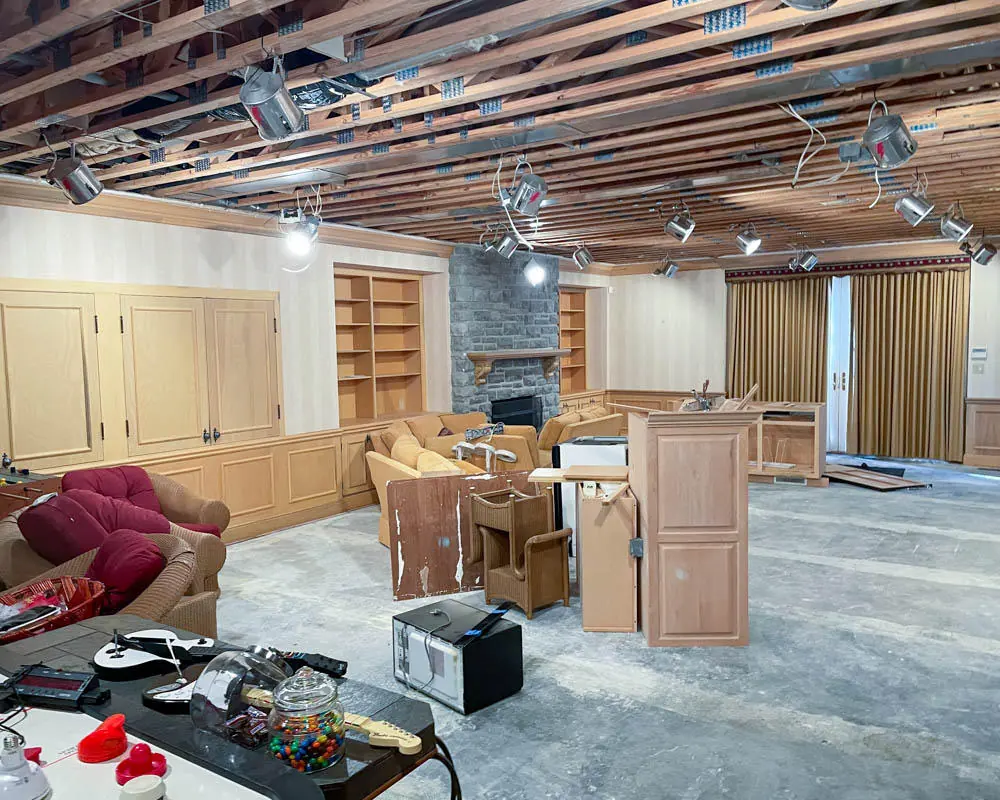
A washing machine overflow can flood a Riverside garage or laundry room in minutes and reach adjacent rooms fast. All Restoration Solutions responds in about an hour with IICRC-standard crews for extraction and drying.

Crews close the supply valve if still open and extract standing water from the garage or laundry room floor.
Stored items, boxes, and materials near the laundry area are checked for water damage and moved as needed.
Flooring, drywall, and baseboards affected by the overflow are dried with air movers and dehumidifiers.
Damaged flooring and drywall are repaired, and crews recommend replacing supply hoses with braided steel lines.

While help is on the way, these first steps, done only where it is safe, limit the damage and protect the insurance claim.
Shut the supply off at the source, or close the home's main valve if the source is not obvious. Stopping the flow limits the damage more than anything else.
Switch off electricity to the affected area, but only if the breaker can be reached without standing in or touching the water.
Get a crew dispatched right away. The sooner extraction and drying begin, the more flooring, drywall, and belongings can be saved.
Take photos and a short video of the water and the affected rooms before anything is moved, so the insurance claim starts strong.
Washing machine overflow cleanup in Riverside typically runs $350 to $2,200, depending on how much water escaped and whether the flooding reached stored belongings, drywall, or an adjacent room. Garage concrete floors are easier to dry than carpeted laundry rooms. Insurance generally covers sudden hose or valve failures as accidental water damage.
Crews reach Riverside and the Inland Empire fast, from Magnolia Center and the Wood Streets to Arlington, La Sierra, Orangecrest, and nearby Corona and Jurupa Valley. See the full list on the areas served across Riverside page.
See all areas servedEvery loss is photographed, measured, and logged from the first visit, so the paperwork holds up with your insurance carrier.
Technicians follow recognized IICRC drying standards and prove the work with daily moisture readings, not guesswork.
Emergency dispatch any hour of the day or night, with a real crew on the way, not a callback in the morning.
A real crew dispatched any hour, not a callback in the morning.
Trained technicians following recognized IICRC drying standards.
Truck-mounted, portable, and submersible for any size loss.
The loss is documented and billed to the carrier directly.
Crews recommend replacing rubber supply hoses every 3 to 5 years, or switching to braided stainless steel hoses, which last significantly longer and resist the cracking that garage heat causes in standard rubber lines.
Sudden overflow from a hose failure or valve malfunction is typically covered as accidental water damage. Damage from a hose that was visibly worn and ignored for a long time may be treated as a maintenance issue.
Yes, and often significantly, since garages tend to store cardboard boxes, paper goods, and other absorbent materials on the floor. Crews assess stored items during cleanup and flag what's salvageable versus a total loss.
Garage floor drains can clog with dust, debris, and lint over time, or they may simply be undersized for a sudden large volume of water from a burst hose. Crews check the drain during cleanup and can flag it for service.
Crews handle the water extraction and structural drying, and crews can install replacement braided steel hoses as part of the cleanup so the same failure doesn't happen again.
Riverside crews are on call 24 hours a day, local and fast, and can be on the way within the hour.
Call (951) 406-6363